
Topdressing & Leveling (After Sod Has Rooted)
After sod knits in, small low spots and a little waviness are normal—especially on clay that wets and dries across the seasons. Topdressing can smooth the surface and slowly improve soil structure when you keep layers thin, use screened material, and work product down into the canopy without burying living grass.
What the work actually looks like
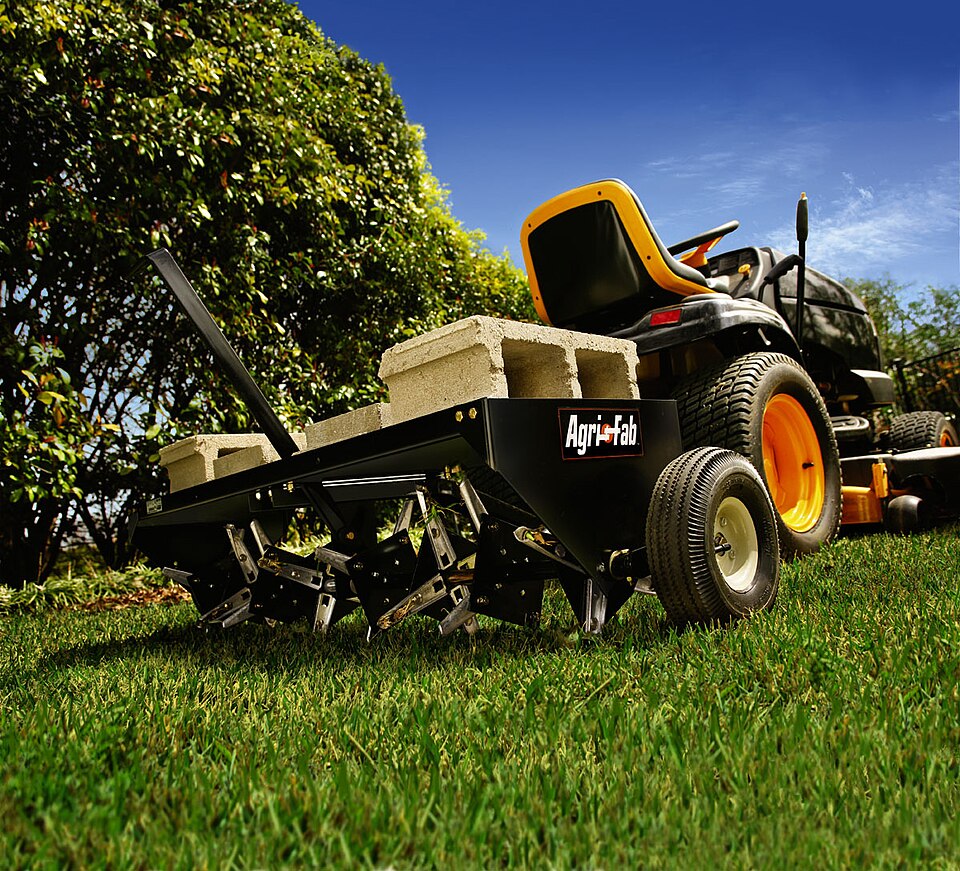
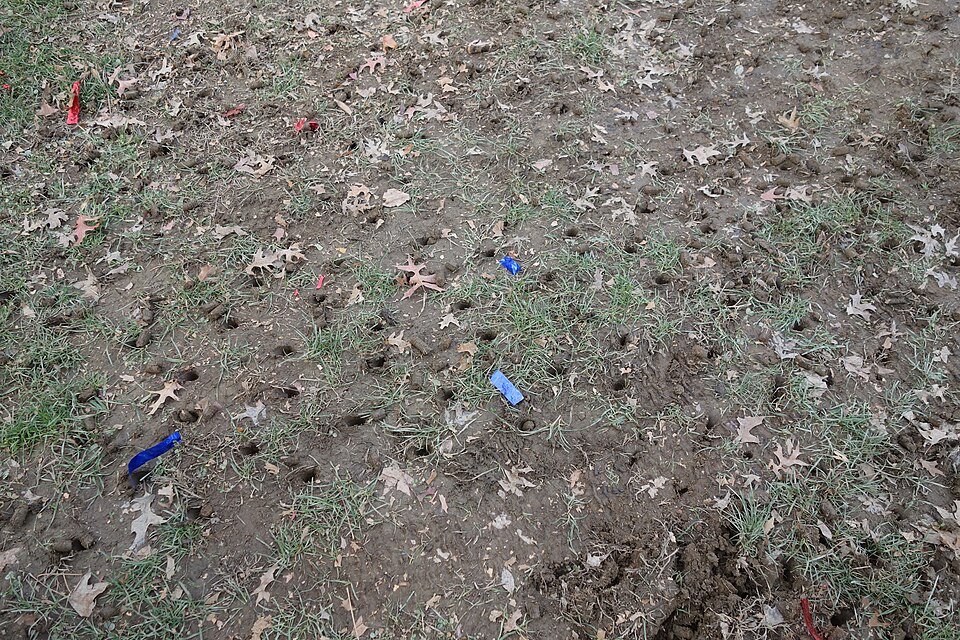
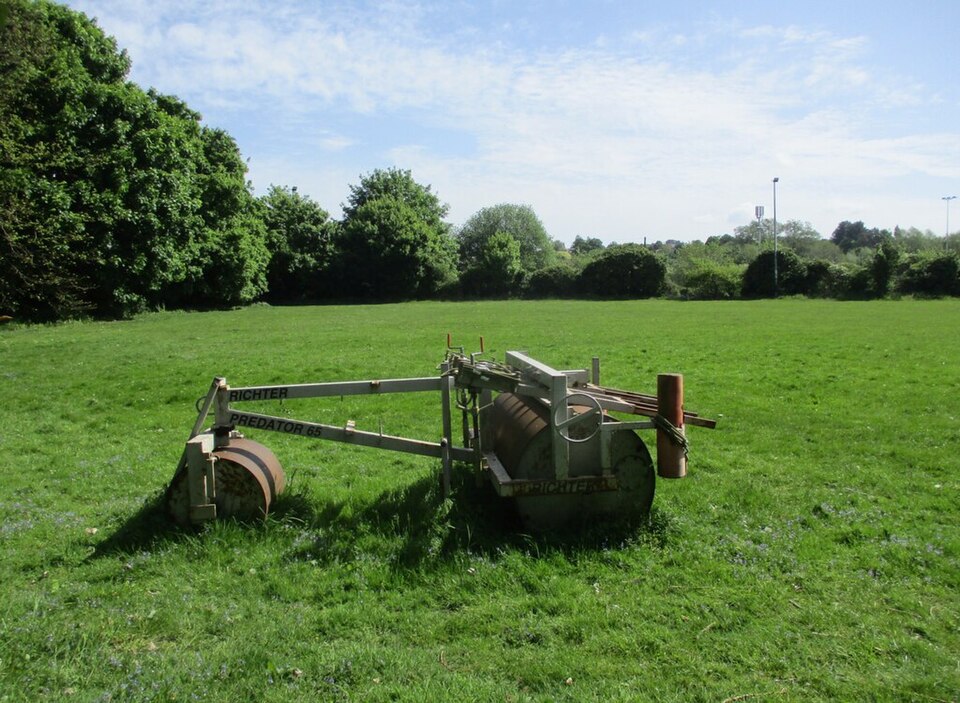
Residential crews use different tools than a sports field, but the ideas are the same: open the soil when compaction is part of the story, drop material in small batches, then brush, rake, or drag it so the turf canopy stays partly exposed. A water-filled lawn roller can help settle a light topdressing pass; on wet clay, rolling can also compact—use it sparingly and when the soil is only slightly moist, not soggy.

_09_-_Aerated_Grass.jpg)

Why your lawn looks “wavy” after sod
- Settlement is normal. Soil under sod keeps compacting and wetting/drying, especially after heavy rain cycles.
- Clay moves. It shrinks when dry and swells when wet, so low spots can appear or deepen over time.
- Water follows lows. A shallow dip can stay wetter longer and show up as thinner turf or moss—not always a “grass disease.”
When to level after sod
- Wait until it’s rooted. If sod still lifts at seams, it’s too early to drag heavy material across it.
- Work during active growth so blades can push up through a thin layer of dressing.
- Stack thin passes. Two or three light applications on different weekends beat one thick layer that shades the crown.
Think of leveling as a sequence of small corrections. Each pass should leave plenty of green leaf showing; if you can’t see the tips, you’re trending toward smothering and a re-sod or seed repair in that patch.
Topdressing materials (what “50/50” usually means)
In the Raleigh–Durham area, “50/50” most often describes a sand plus topsoil or sand plus compost blend sold for leveling or sports-turf maintenance. The ratio is a marketing shorthand—batches vary by supplier, how coarse the sand is, and whether the “soil” half is bank sand, screened topsoil, or compost.
- pH and chemistry: Clean masonry or river sand is close to neutral. Many local topsoils lean slightly acidic, which is often compatible with common warm-season lawns and tall fescue in the Triangle—but it is not a guarantee. If you are correcting a known pH problem, treat topdressing as structure work and handle pH with soil testing and targeted lime or other amendments (see lime, pH, and topsoil).
- Sand-heavy mixes for leveling: Useful for filling shallow dips and smoothing grade when the product is screened and applied in thin lifts. On heavy clay, sand should be part of a plan that also addresses compaction; dumping sand into a hardpan without aeration can lock up poorly over time.
- Compost-forward mixes for soil improvement: Compost feeds soil life and improves water holding in a way sand alone does not. It is usually the better “slow improvement” choice when you are not trying to build a putting green profile.
- Know what you’re buying: “Fill dirt,” unscreened bank run, or mixes with trash and rock make lawns worse. Ask whether the product is screened, what the sand source is, and whether the blend is meant for turf—not beds or hardscape base.
Why light passes beat one heavy application
A thick layer of anything—sand, soil, or compost—reduces light to the crown, slows gas exchange, and keeps tissue wet longer. That shows up first where the turf is already stressed: shade margins, dog paths, heat pockets, and weakly rooted sod seams.
- Smothering is a real risk. If material sits across blades for too long, grass can yellow or thin; in extreme cases you can kill patches outright, especially fine fescues and other shade-adapted grasses that tolerate less burial. Bermudagrass and zoysia often recover from a modest mistake faster than tall fescue, but none of them tolerate a deep “blanket.”
- Disease pressure: A wet thatch-like layer on top of the canopy extends leaf wetness and can invite summer patch problems when humidity is high—another reason to keep passes thin and to water in the morning if you need to settle dust.
- Practical rule: After each pass you should still see roughly half or more of the grass blade above the mix once it is brushed in. If not, stop and rake off excess before you move on.
How to level low spots (customer-safe method)
- Step 1: Mow at your normal height (don’t scalp) and clear sticks and debris.
- Step 2: Drop small piles in the low area—not a uniform blanket across the whole lawn unless you have a specific plan.
- Step 3: Use a stiff broom, leveling rake, or drag mat to work material down into the canopy and feather edges into the surrounding grade.
- Step 4: Keep leaf tips visible; avoid filling around the crown like a bowl.
- Step 5: Water lightly to settle dust, then return to your normal irrigation pattern once the turf is dry enough to walk on.
Deeper depressions are a multi-weekend project: build up in thin lifts so the grass underneath keeps photosynthesizing.
Topdressing for soil improvement (not just leveling)
When the goal is better rooting and structure rather than grade change, compost or a compost-heavy blend is usually the better tool than sand alone. Organic matter supports microbial life and helps clay behave more predictably around wetting and drying.
- Compost is the default “soil builder.” Screened, mature compost is less likely to bring in weed seed than raw manures.
- Repeat small doses. Think in terms of what the canopy can tolerate each time—not the total you hope to add across a whole season. The same total volume split across two or three visits is almost always safer than one deep layer.
- Pair with aeration on clay. Core aeration creates holes; a light topdressing afterward lets a little material move into the upper root zone instead of sitting on top as a cap.
Pairing with aeration (especially on Triangle clay)
For heavy clay that sheds water on the surface but still dries out roots in places, the durable combination is usually mechanical core aeration during strong growth, followed within a few days by a light compost or quality leveling mix brushed into the canopy. Aeration addresses compaction; topdressing adds incremental structure and smoothness—but neither fixes bad irrigation layout or buried hardscape edges.
“Liquid aeration” products are a different category: they are often wetting agents and soil surfactants that change how water films behave. They can help with localized dry spots, but they do not pull cores. For a fuller comparison and maintenance expectations, read Aeration: core vs liquid.
Where homeowners usually get into trouble
These are the patterns we see when DIY leveling creates more work than it saves—not a lecture, just the failure modes.
- Burying the canopy. If grass disappears under material, you have shifted from leveling to patch repair. Rake back until tips show, or strip and re-establish that section.
- Wrong fill. Unscreened fill, heavy subsoil, or debris-laden “cheap topsoil” leaves ruts, rocks, and wet pockets. Spend effort on sourcing, not on redoing the lawn.
- Chasing grade without fixing water. If heads miss a corner or a gutter dumps on one edge, a low spot will keep returning as thin turf or moss until the hydrology and coverage are corrected.