Brown Patches: Heat vs. Drought vs. Fungus
Start by ruling out watering coverage—poor or uneven watering is most often mistaken for fungus or disease in the Triangle.
Quick checks (do these first)
- Dry zone pattern? Edges, corners, sunny strips, and slopes point to coverage issues.
- Pull test. If the grass pulls up easily with little root, it’s often drought/coverage or new-sod rooting.
- Morning dew window. Persistent wetness overnight can increase disease pressure.
- Compaction? If water runs off but spots stay dry, try the screwdriver test on moist soil.
If it’s drought / coverage
- Increase frequency short-term (short cycles), especially for edges and seams.
- Fix the head. Aim, unclog, replace, or add coverage for dead zones.
- Don’t “fertilize the patch.” Feed after the watering issue is solved.
If it’s heat stress
- Raise mowing height and stop scalping.
- Water to survive, not to flood. Keep roots alive; avoid staying saturated.
- Recovery happens when temperatures ease. Don’t expect instant green.
If you suspect fungus
- Water in the morning only. Avoid late afternoon/evening watering.
- Improve airflow. Reduce excessive thatch; avoid heavy nitrogen pushes.
- Avoid daily irrigation. Long leaf-wetness windows are a major driver of risk.
- Be cautious with “throwing products at it.” Correct the environment first.
Brown patch needs a long leaf-wetness window to infect. The best prevention is watering early (just before sunrise), keeping mowing habits stress-reducing, and avoiding excessive nitrogen during peak hot/humid disease windows.
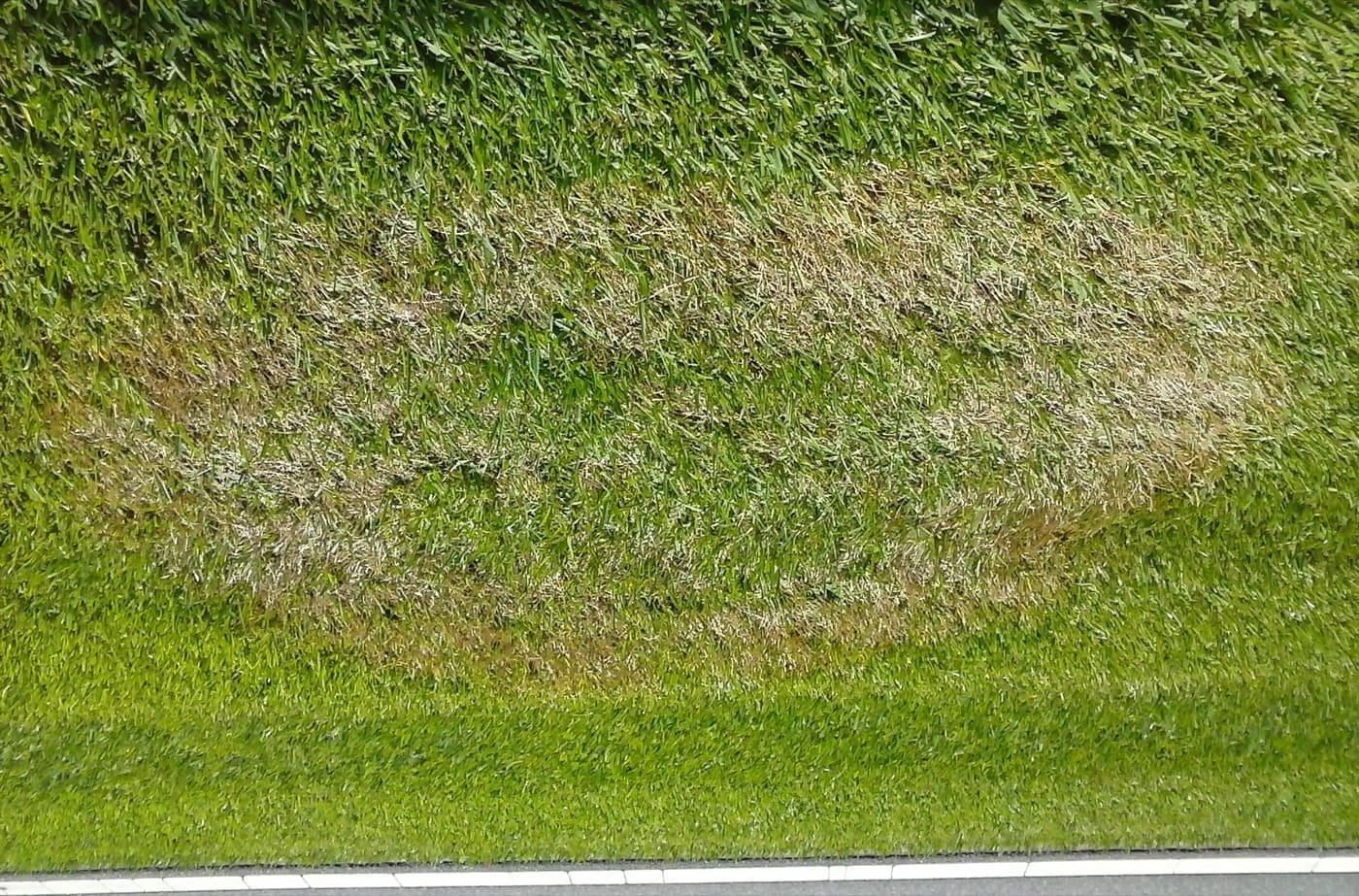
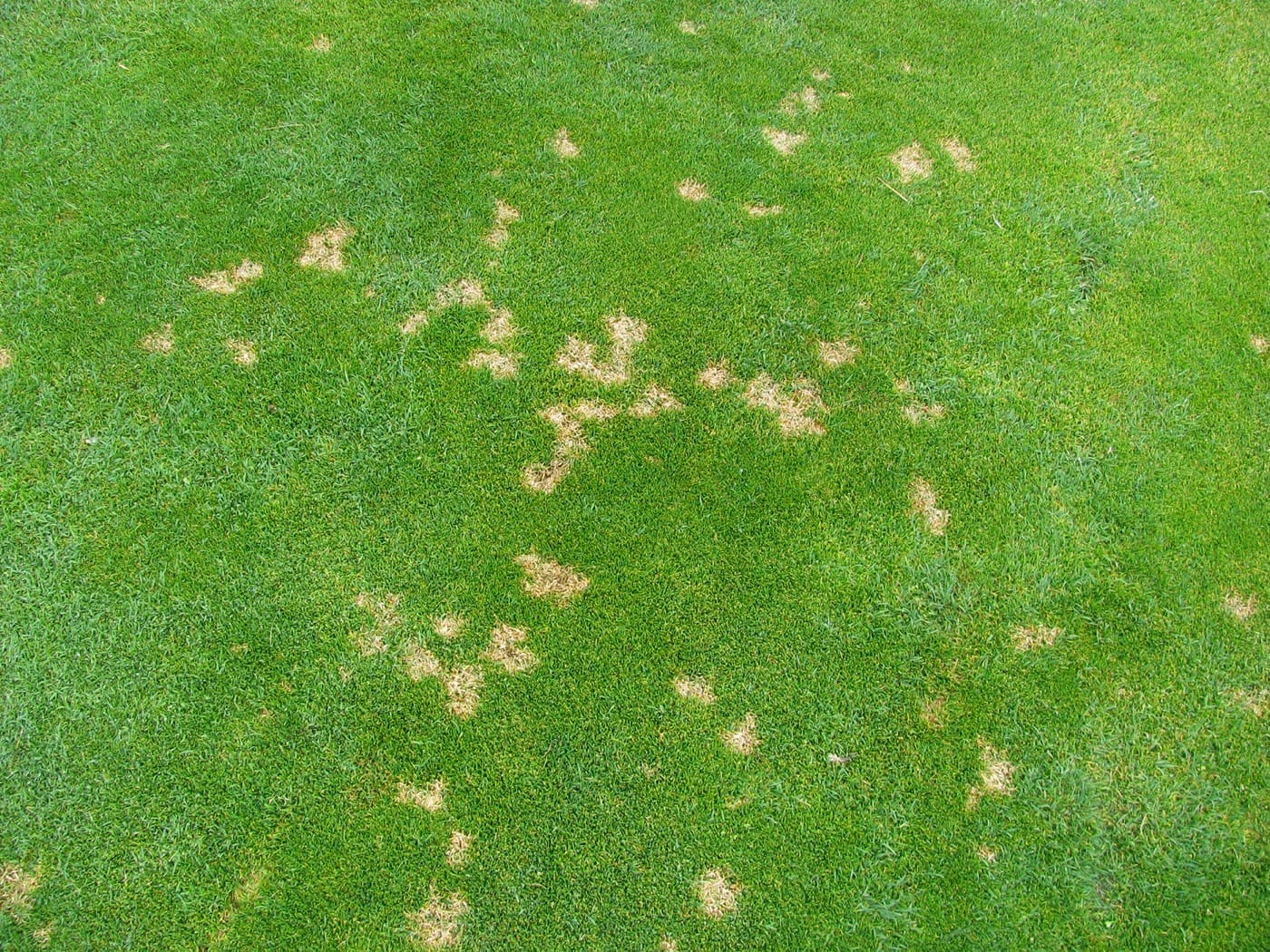
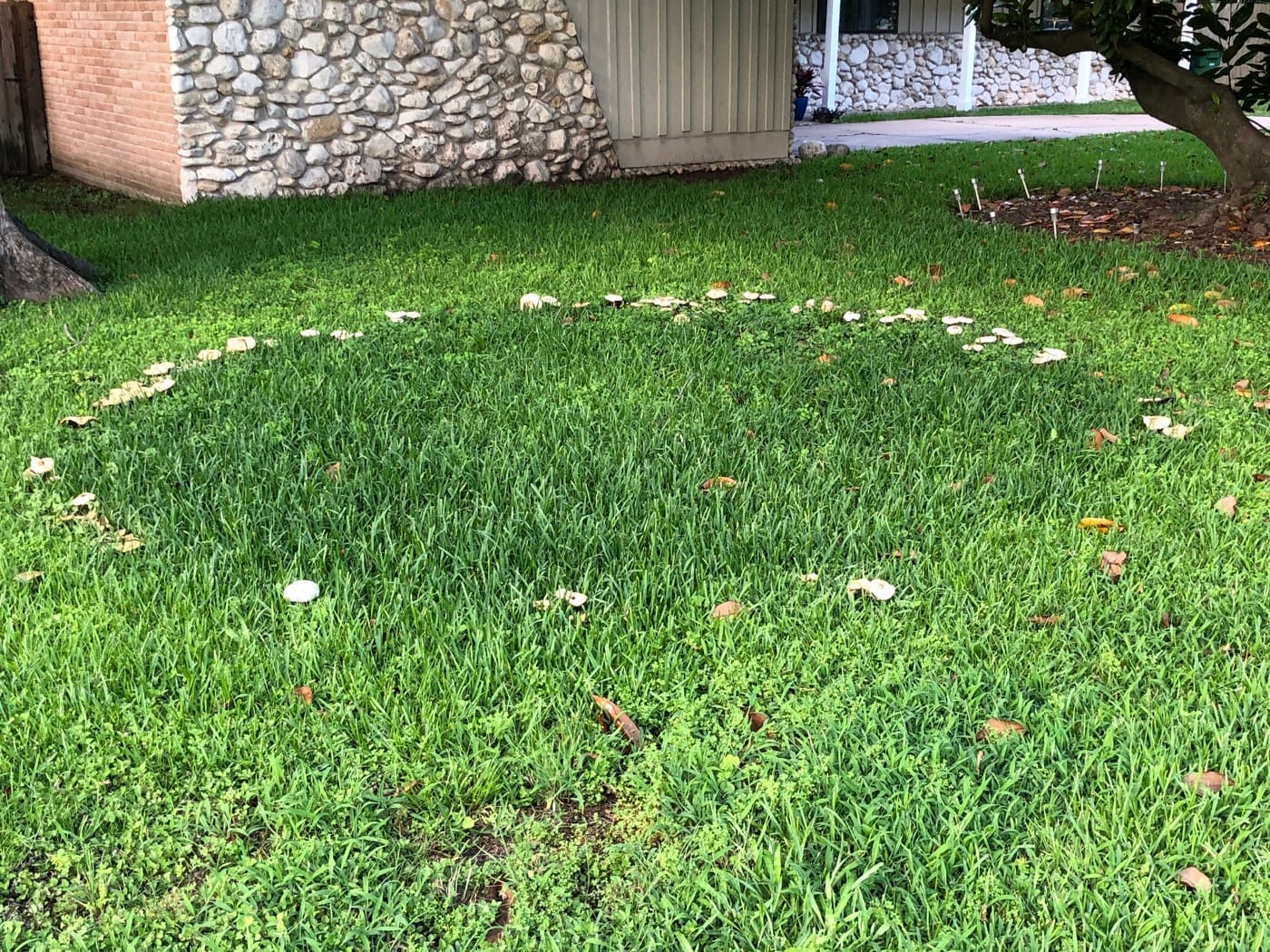
What turf diseases can look like (photos—not a diagnosis)
Patterns overlap with drought, dog spots, fertilizer streaks, and insects. Use these as visual references; confirm with your county Extension office or NC State TurfFiles.