
Weed Control & Lawn Herbicides (Grass-Specific)
There’s no "miracle" weed killer that works for everyone. Because different grass types react differently to chemicals, what works on one lawn can easily brown another. Effective weed control isn't just about the right spray—it’s about matching the product to your specific grass type and treating the underlying issues that let weeds take root in the first place.
Always follow the product label for turf species, application rates, temperature limits, and safety buffers near gardens or waterways. This guide is for educational purposes and isn't a substitute for the official product label directions.
Why “weed & feed” often misfires
- Timing conflict: the best week for pre-emergent is rarely the same as the best week for nitrogen—and summer nitrogen pushes can invite burn on stressed turf.
- Overlap risk: homeowners forget what they already applied and duplicate actives across liquids and granulars.
- Grass sensitivity: many consumer mixes are built around northern cool-season assumptions and do not match centipede or zoysia tolerance without careful label reading.
Major Product Types and Uses
- Glyphosate: A non-selective herbicide that kills almost any plant it contacts. Ideal for spot spraying, edging, or clearing areas before renovation. Common examples: Roundup, Killzall. It does not typically leave a soil residue, meaning you can replant relatively soon, but it will kill your turf if it drifts.
- Triclopyr: A selective, post-emergent herbicide used for tough broadleaf weeds and woody plants. Common examples: Ortho GroundClear Poison Ivy & Tough Weed Killer, Brush-B-Gon. Highly effective but requires careful use, as it can harm certain turfgrasses or nearby ornamentals if drift occurs.
- Diquat: A fast-acting, non-selective contact herbicide. Common examples: Spectracide Weed & Grass Killer. Burns down leaves on contact but doesn't move well to roots, making it useful for rapid knockdown of young weeds.
- 2,4-D: A foundational selective, post-emergence herbicide that mimics plant growth hormones, causing uncontrolled growth and death in broadleaf weeds. A staple in most consumer lawn weed killers. Common examples: SpeedZone, Trimec, Ortho Weed B Gon. Must be used at labeled rates to avoid turf injury during heat.
- Dicamba: Often combined with 2,4-D, this selective herbicide is powerful against stubborn broadleaf weeds. Common examples: Trimec, Ortho Weed B Gon. Caution required near trees and shrubs, as they can absorb Dicamba through their root zones.
- Pre-emergent (e.g., Prodiamine, Dithiopyr): Creates a soil barrier to intercept germinating seeds. Essential for preventing summer grasses like crabgrass. Note: These can block your own desirable grass seed from rooting, so plan applications around overseeding windows.
A practical look at herbicide types
Understanding how different products work helps you choose the right tool for the job.
Pre-emergent herbicides (The soil barrier)
- How they work: They create a protective barrier in the top layer of soil to intercept weed seeds as they germinate. This is your best defense against crabgrass.
- Important note: Because these products prevent seeds from rooting, they will also stop your own grass seed from germinating. Always coordinate your pre-emergent application with your overseeding plans.
Selective post-emergent herbicides (Broadleaf control)
- How they work: Designed to target broadleaf weeds (like dandelions or clover) while leaving your grass unharmed—provided you use the right product for your lawn type.
- Careful application: Even "safe" herbicides can drift onto garden plants or stress your lawn if used above their recommended temperature limits. Always check the label for "turf tolerance."
Non-selective herbicides (The "kill-all" approach)
- How they work: Products like Glyphosate will kill any actively growing plant they contact, including your lawn. These are best used only for precise tasks, like edging or clearing small areas before starting over.
Common lawn weeds in North Carolina (Triangle cheat sheet)
Piedmont lawns see the same recurring cast: summer annual grasses, winter annual broadleaves, stubborn perennials, and a few look‑alikes that need different chemistry than “standard weed killer.” Strategy follows weed category and your turf species label, not the bag art.

_in_a_backyard_lawn_(14442094141).jpg)





Summer annual grasses (pre‑emergent is the main prevention)
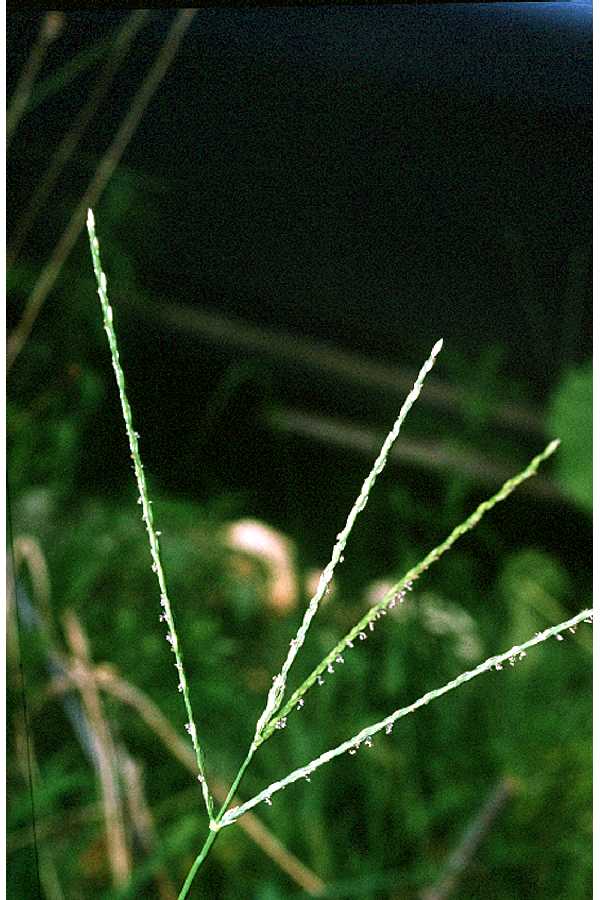
- Crabgrass: low, spreading summer grass with wider blades than most turf; thrives along edges, driveways, and thin spots. Stop it with timed pre‑emergent before soil temperatures drive germination—then use labeled post‑emergent grassy controls for escapes (often different products than broadleaf sprays).
- Goosegrass: silver/base stems, tough in compacted wear paths; often grouped with crabgrass discussions but may need slightly different timing/products—read labels carefully.
Winter annual broadleaves (show up when turf is thin)
- Common chickweed: small opposite leaves, delicate stems; carpets bare areas in cool weather. Usually handled with labeled broadleaf selective sprays when the turf type matches—often easiest while young and actively growing.
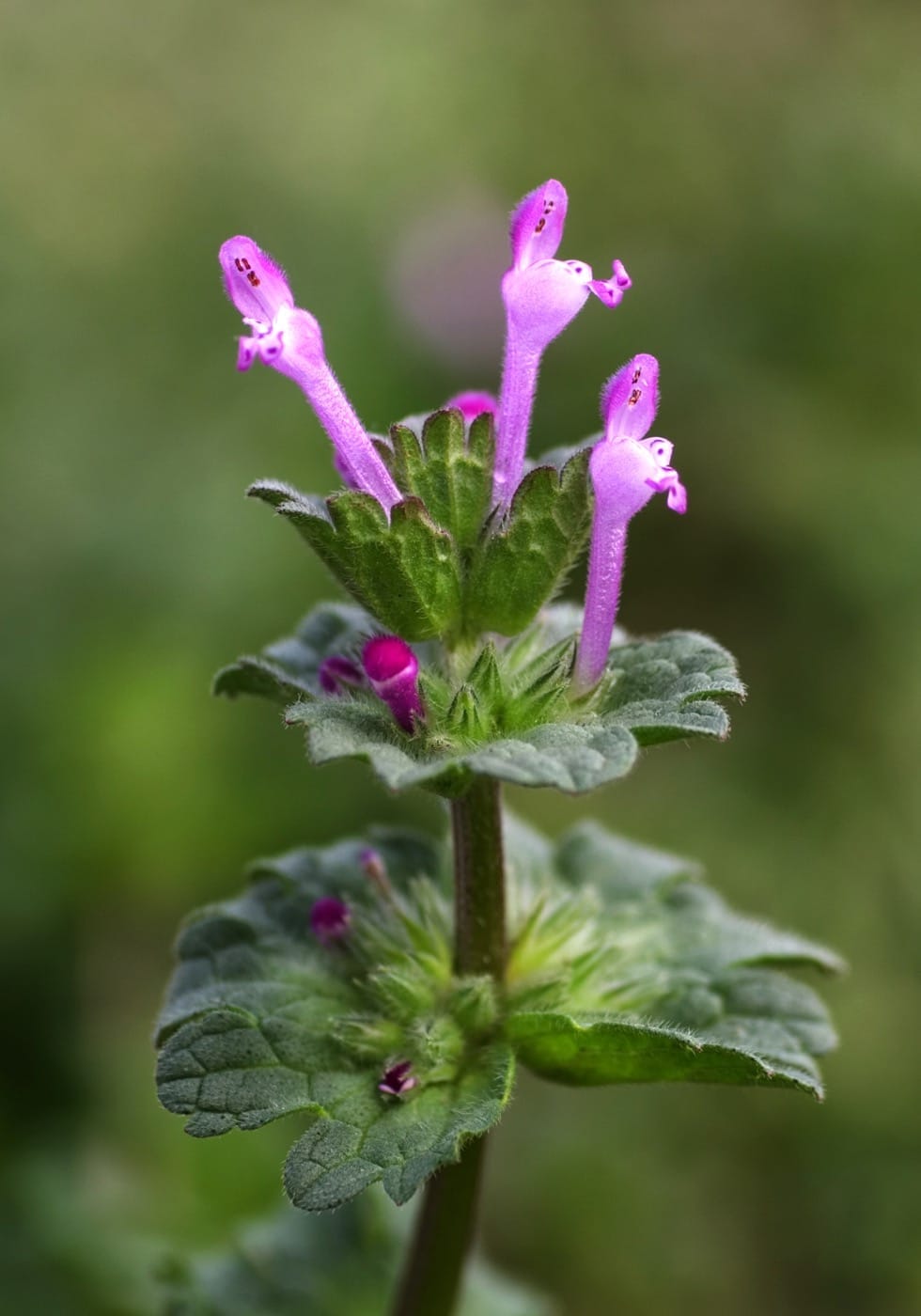
- Henbit / purple deadnettle: square stems, mint‑family look, purple flowers in cool months. Same broadleaf‑program conversation as chickweed for many lawns—still verify warm‑season tolerance on the label.
- Lawn burweed / “sticker” weeds: tiny plants in winter that mature into painful shoes‑and‑paws stickers by late winter/spring—another reason thin turf gets attention before February/March in NC.
Perennial broadleaves (patience + repeat timing)
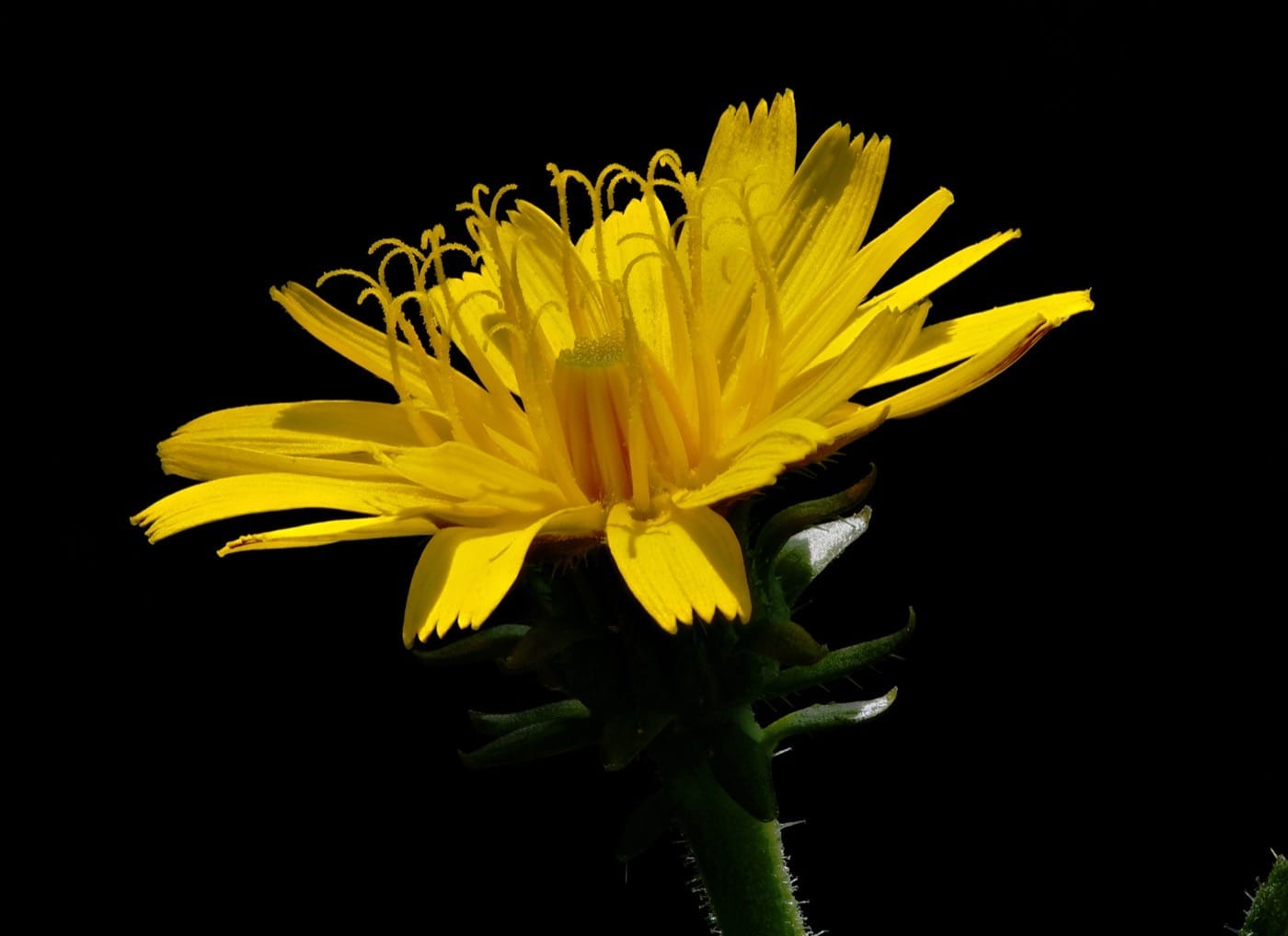
- Dandelion: classic yellow flower and hollow stem; deep taproot means one spray rarely erases a mature plant.
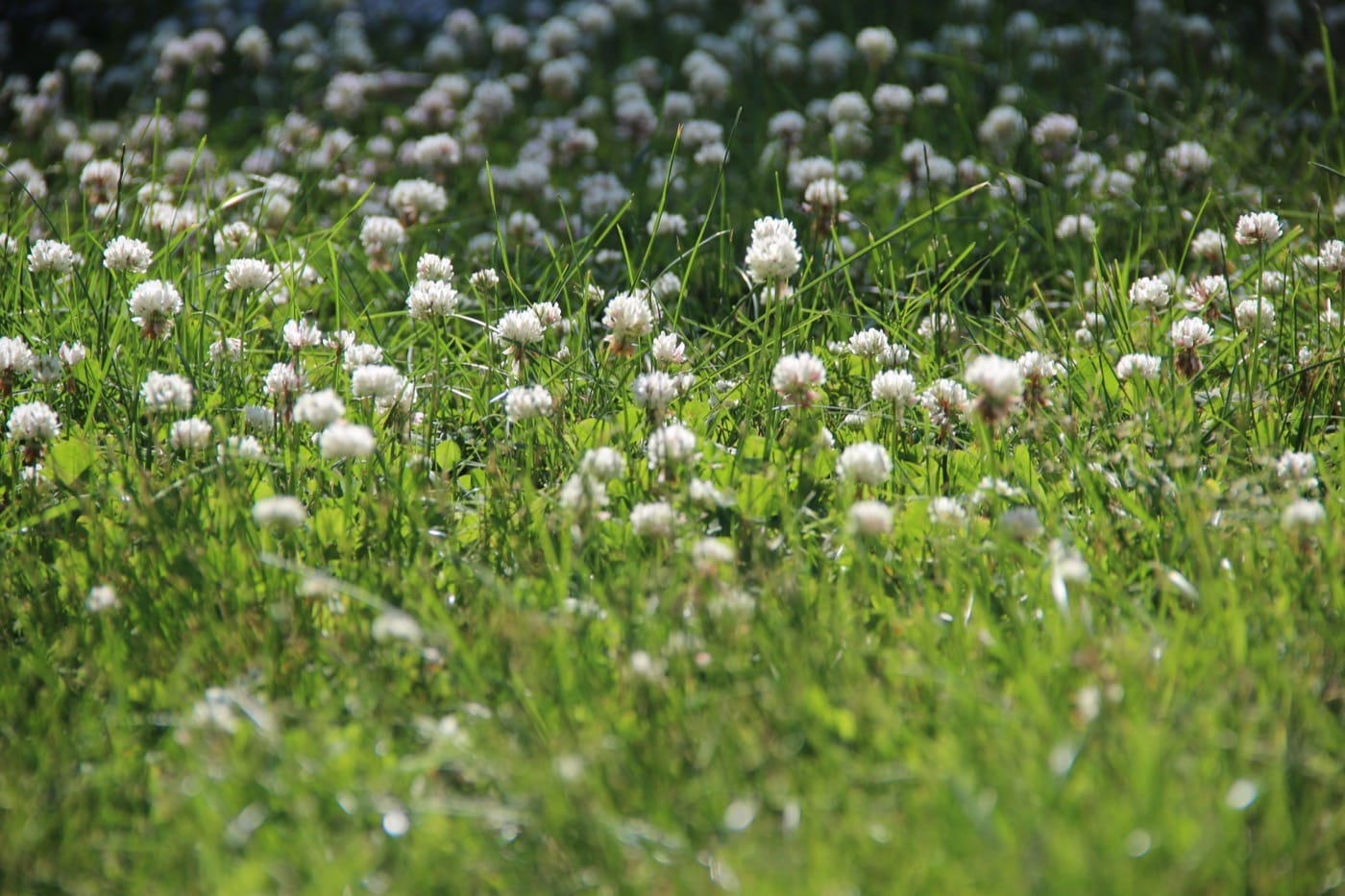
- White clover: trifoliate leaves and white flower heads; thrives where turf is thin or low nitrogen—culture + labeled broadleaf programs when appropriate.
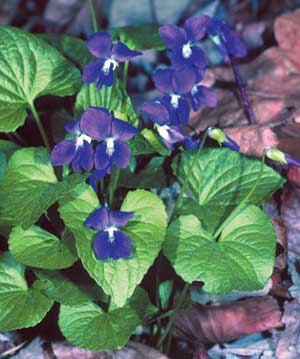
- Wild violet: heart‑shaped leaves, purple flowers, loves shade and moist spots—often needs persistent, label‑legal programs because waxy leaves shed spray poorly.
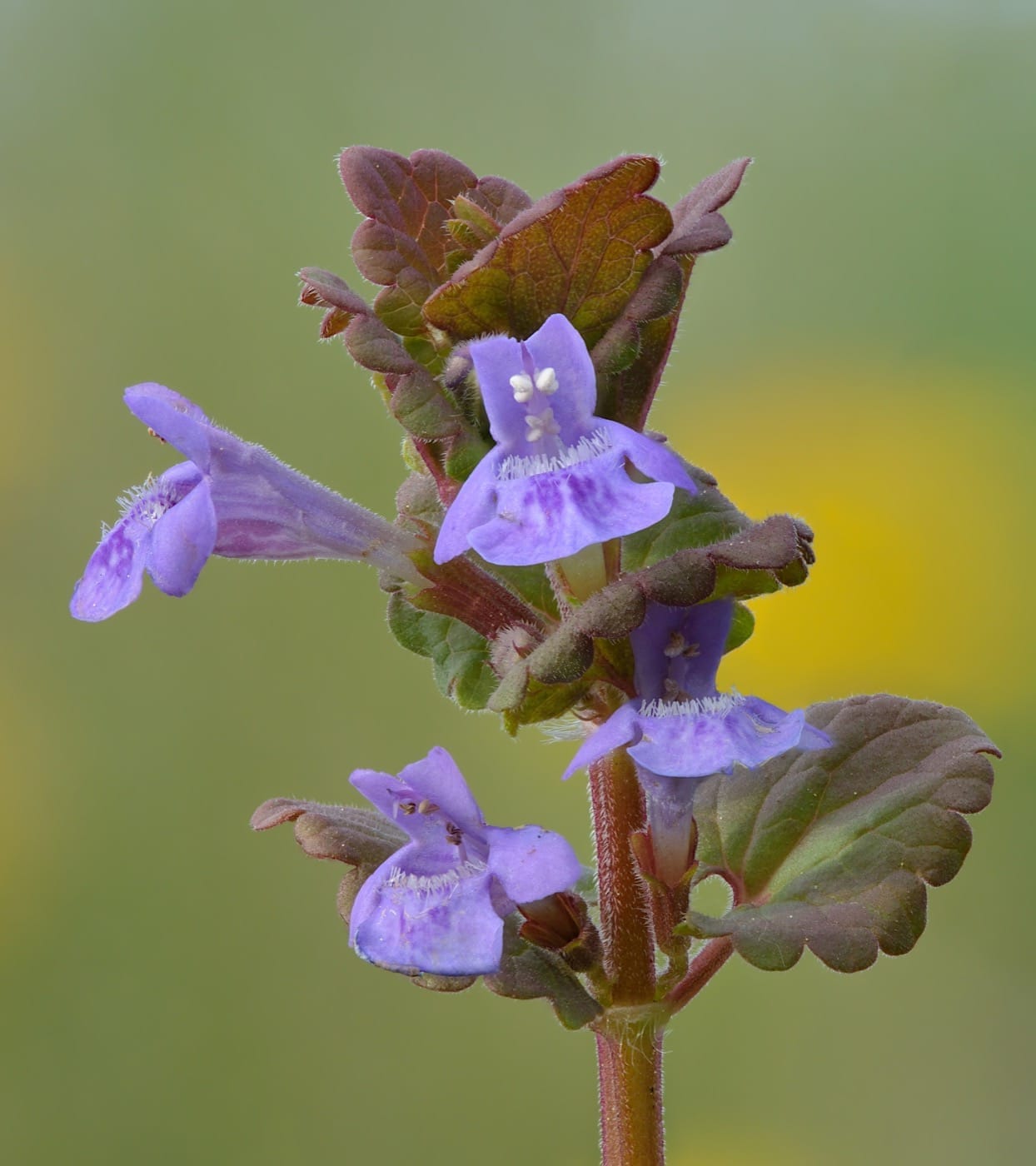
- Ground ivy (creeping Charlie): scalloped round leaves, creeping stems, mint odor when crushed; common under trees where turf struggles—shade and airflow fixes matter as much as chemistry.
- Broadleaf plantain: flat rosettes with parallel‑veined ribbed leaves; flags compaction and wear paths.
Sedges & coarse grasses (not “just crabgrass”)
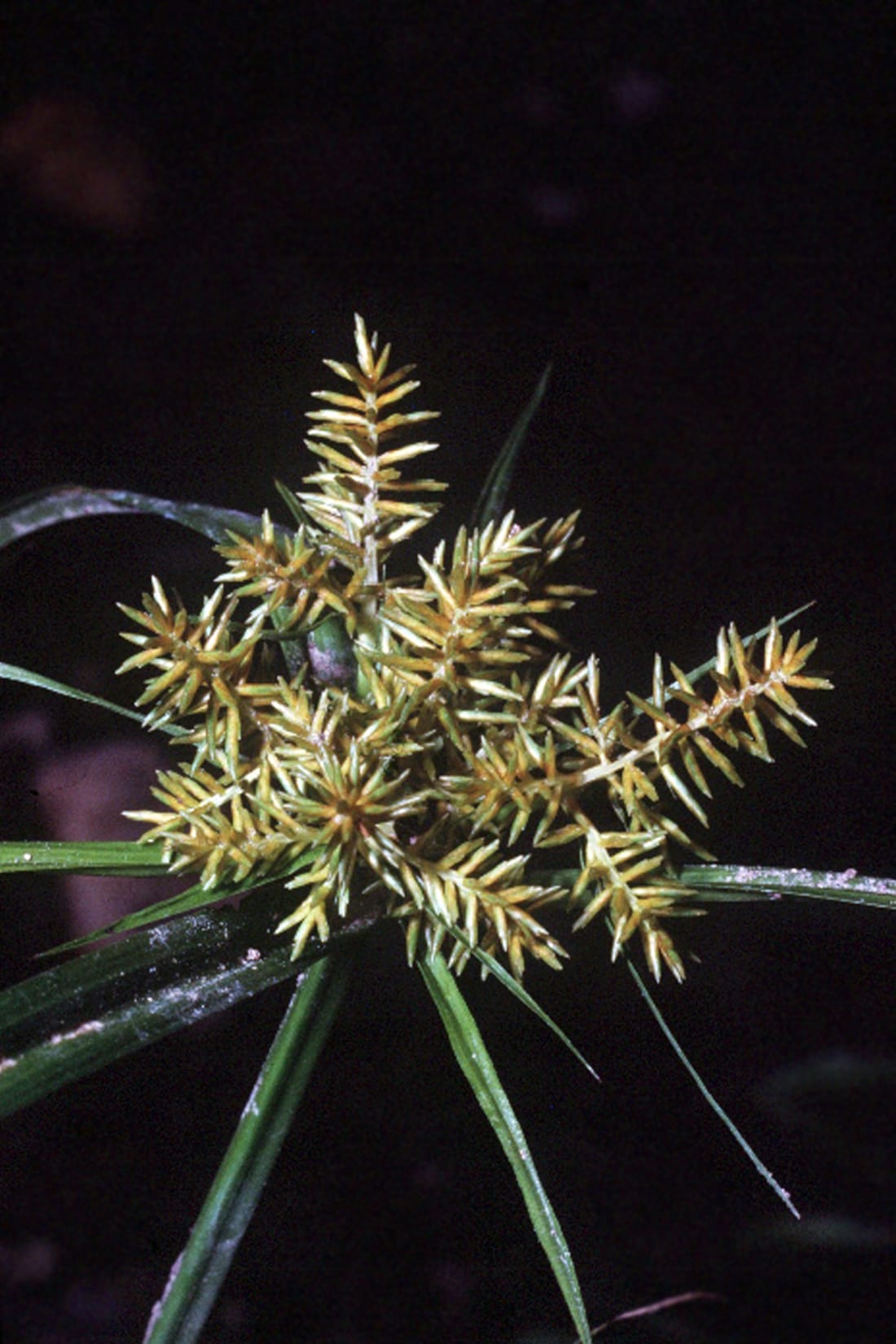
- Yellow nutsedge: glossy yellow‑green leaves; stems feel triangular when rolled; grows faster than turf after mowing. Standard broadleaf sprays often ignore it—look for labeled sedge controls and fix drainage/low spots where it thrives.
- Dallisgrass / bahiagrass clumps: coarse perennial grasses that stand out in fine lawns; DIY selective control is inconsistent—sometimes renovation or professional programs are the realistic answer.
Other weeds Triangle homeowners ask about
- Annual bluegrass (Poa annua): light‑green bunches and early seedheads in spring; blends into cool‑season lawns; management mixes cultural tactics with restrictive herbicide timing—often discussed alongside pre‑emergent strategy for a clean lawn.
- Spurge (spotted / prostrate types): milky sap, hugs the ground along edges and heat strips; signals thin turf + moisture imbalance.
- Virginia buttonweed: mat‑forming perennial with white star‑shaped flowers—more common in poorly drained or over‑irrigated warm‑season lawns; often needs repeated labeled programs, not one spray.
If you’re unsure, photograph the weed and compare images with reputable references such as NC State TurfFiles (and your county Extension office)—before buying products that don’t match your grass type on the label.
Heat, drought, and “burn” (three different failures)
- Fertilizer burn: concentrated nitrogen—especially quick-release—applied to thirsty turf or overlapped heavily in heat shows up as streaky browning. Fix culture first (water coverage), then feed conservatively when grass is actively growing.
- Herbicide injury: labels commonly warn against spraying stressed lawns or above temperature limits (often around the mid‑80s °F range—your label is authoritative). Hot calm afternoons increase odor/vapor risk for some formulations.
- Salt stress stacking: potassium fertilizers and certain amendments add soluble salts; stressed turf recovers slower—avoid “panic stacking” products during peak summer decline on cool-season lawns.
See also Fertilizing & recovery and Seasonal lawn calendar.
Grass-type reality (Triangle lawns)
- Tall fescue: many broadleaf mixes are widely used, but timing still matters for stress and seeding windows. Pre-emergent timing is seasonal—coordinate with fall overseeding plans.
- Bermuda: generally aggressive and repairs fast, but still injured by off-label broadleaf mixes and overlaps.
- Zoysia: slower to recover from herbicide mistakes; favor conservative rates and explicit label listings for zoysia.
- Centipede: typically wants a lighter fertility program and can be sensitive to herbicides that other grasses tolerate—treat “northern weed killer” assumptions as unsafe until the label agrees.
New sod, seed, and pre-emergents
- If you plan to seed or overseed, many pre-emergent programs must move earlier/later or wait until after establishment—otherwise you paid for seed that hits a chemical wall.
- New sod needs weeks of rooting before aggressive weed programs; follow establishment guidance first.
Related guides
- Fertilizing & recovery
- Lime, pH, and topsoil
- Seasonal lawn calendar
- Mowing basics
- Brown patches (symptoms can mimic spray injury)